Bloons TD 6
- 4.8
- Rating
- 5.00M
- Installs
- $6.99
- Price

 Analysis by App-foxy
I came to Bloons TD 6 expecting a familiar lane-defense game, but what kept me playing was how much control it gives me over the tower setup. The basic idea is easy to understand: stop waves of balloons before they reach the exit. The interesting part is deciding which towers to place, when to upgrade them, and how to reshape the defense when a plan starts to fail. That flexibility is the real reason this strategy game has stayed on my device.
Developed by ninja kiwi, it is a paid game for Android, with a listed price of $6.99 and optional in-app purchases ranging from $0.99 to $49.99 per item. It is rated for Everyone, runs on Android 8.0 or later, and the current version is 56.3. Those details matter because this is not a tiny disposable time-killer: it is a substantial strategy experience that asks for attention, planning, and sometimes patience.
Why flexible tower building makes each round feel different
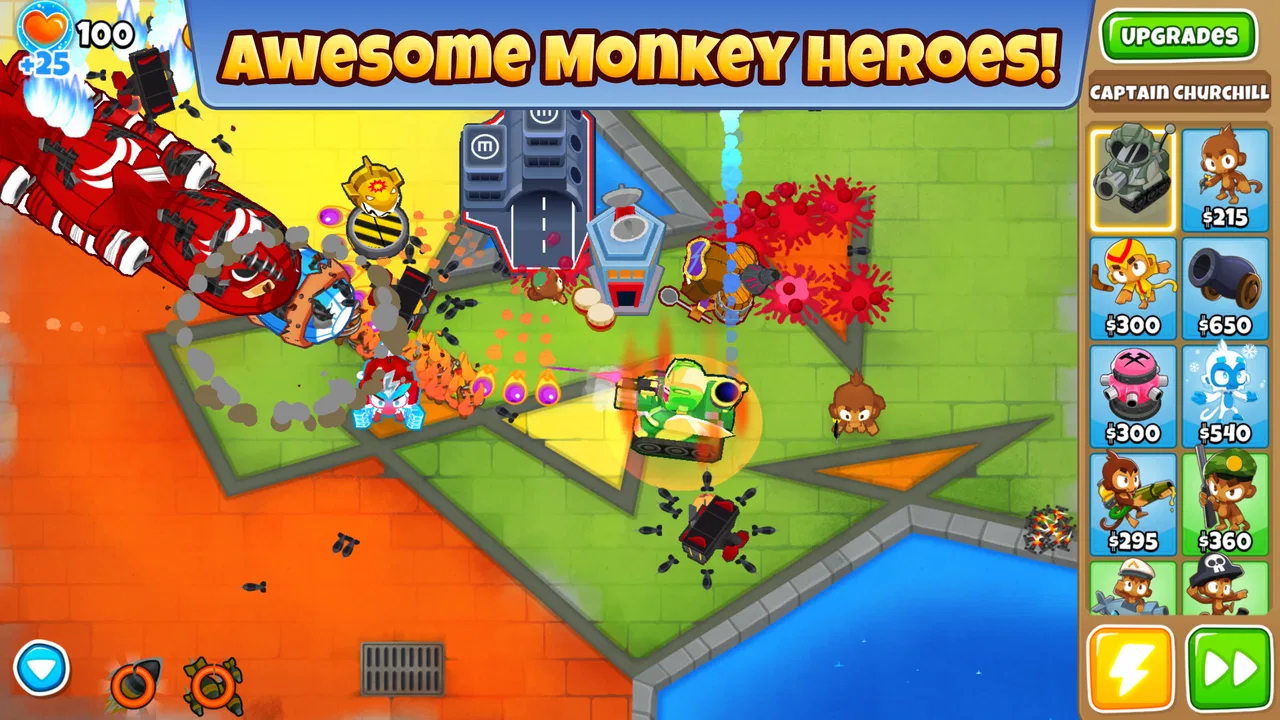
The capability I noticed most is the freedom to build a defense around different tower roles instead of following one fixed recipe. A tower that looks useful early may become less valuable later, while another that seemed too specialized can suddenly solve a problem that nothing else handles well. That makes every round a series of small decisions rather than a simple exercise in placing the strongest available unit.
You May Also Like

 Pandora - Music & Podcasts
Pandora’s Music Is Easy to Start, but Harder to Recover
Pandora’s strength is its low-effort path from a seed to a station. Its weak spot is how much confidence it asks you to place in connection, setup, and quiet recovery.

 8 Ball Pool
 Is Built on Rivalries, Rematches, and Routine
A close look at the rivalries, rematches, shared routines, and unanswered safety questions that turn a quick pool match into a persistent mobile community.

 Samsung Music
’s Quiet Strength Is Playing What You Already Own
Its reach comes less from spectacle than from dependable access to a personal library. That simplicity is both the app’s strongest retention engine and its ceiling.

 AccuWeather: Weather Radar
AccuWeather Review: A Quick, Clear Forecast for Everyday Decisions
For everyday plans, the best forecast is the one you can understand quickly. AccuWeather makes rain timing, radar, and local conditions easy to act on, with a few trade-offs.

 Hill Climb Racing
Why Hill Climb Racing Still Turns Crashes Into One More Run
A tiny car, a bumpy hill and one more upgrade: Hill Climb Racing keeps resurfacing because its simple chaos makes every near-miss feel personal.

 AliExpress - Shopping App
AliExpress Makes Global Shopping Feel Personal, but Shoppers Bear the Risk
AliExpress turns a global marketplace into a pocket-sized discovery engine. Its reach is useful, its shopping loop compelling, and its trade-offs easy to miss.
More From Our News Desk
View All News


I like that the game rewards thinking in layers. One tower may deal with ordinary balloons efficiently, another may provide coverage in a difficult part of the path, and a third may be chosen because its upgrades change the way the whole defense behaves. The best placement is not always the tower with the biggest immediate damage. Sometimes it is the one that gives me better control over a bend, a long straight section, or a crowded entrance where several targets arrive together.
This is where the “tower defense” label becomes more meaningful. The challenge is not merely reacting to enemies on screen. I am constantly weighing short-term survival against long-term development. Spending everything now can rescue a dangerous wave, but it may leave the next phase underprepared. Saving for a more important upgrade can make the current round uncomfortable. That tension gives the game its rhythm.
The large player response also makes sense to me. The game has an average rating of 4.8 from around 401,000 ratings, with roughly 67,000 written reviews and over 5 million installs. Those figures do not make it automatically perfect, but they reflect how well the central loop works for people who enjoy planning defenses and improving after a failed attempt.
What the core loop feels like during play
A typical session starts calmly. I place a few towers, watch the first waves, and use the early income to establish a foundation. The danger is that this quiet opening can encourage careless spending. Once the balloons become faster, tougher, or more varied, a defense that looked comfortable can suddenly have a clear weakness. I then have to decide whether to upgrade existing towers, add a new role, or accept that the original layout needs to change.
That last option is important. I do not treat the first placement as permanent in my thinking. A tower can be useful in one part of the path and awkward in another, especially when its range misses the section where enemies spend the most time. I have learned to examine the route before buying anything expensive. A slightly less powerful tower with repeated opportunities to attack can be more useful than a stronger one that only sees targets briefly.
The game also encourages me to watch the timing of upgrades instead of purchasing them whenever I have enough currency. An upgrade bought just before a difficult wave can protect the run, while the same upgrade bought too early may slow the rest of the defense. This makes the economy part of the strategy rather than a background detail.
For a new player, the amount of choice can be both exciting and confusing. I would not try to memorize every possible combination at once. I found it more useful to learn one tower at a time, notice what problem it solves, and then test how it works beside a different tower. That approach turns experimentation into a practical learning method instead of a source of overload.
How I approach a difficult map without relying on one recipe
When a layout gives me trouble, I first ask what kind of failure I am seeing. If balloons leak at the beginning, the opening defense may be too weak or poorly placed. If the early rounds are easy but later ones collapse, I may have spent too much on immediate damage and ignored scaling. If the towers are strong but still miss targets, the issue is probably coverage rather than raw power.
This diagnosis is more useful than copying a build blindly. A fixed guide can help someone get started, but it may not teach the reason behind each choice. I prefer to identify the problem, make one change, and see whether the result improves. That habit has helped me understand the game far better than simply placing towers in a predetermined order.
One practical tip is to leave room for adjustment. Filling every useful spot immediately can make the defense look impressive while leaving no space for a tower that becomes necessary later. I now think about future placement before committing to a crowded area. This is a small change, but it prevents many frustrating rebuilds.
Another useful habit is to treat the path as a resource. A tower with a broad view of the route can gain value from repeated passes, bends, or long straight sections. I do not judge a location only by how close it is to the entrance. A central position may be better because it gives the same tower more chances to contribute throughout a wave.
The everyday situation where it works best
The strongest use case for me is a short break when I want something more engaging than a casual puzzle but less demanding than a full action game. I can begin a session with a clear goal, such as testing a new tower combination or improving a defense that previously failed. The game gives me enough room to think, yet the wave structure keeps the session moving.
It also suits a player who enjoys learning through mistakes. A failed round usually gives me something specific to consider: poor placement, weak timing, an overlooked threat, or an upgrade path that did not match the map. I can return with a revised plan rather than feeling that success depended only on luck.
That said, I would not recommend it to someone looking for a completely relaxed experience with no pressure. Even when the presentation feels cheerful, the strategic demands can become serious. A player who dislikes restarting, adjusting a plan, or watching a carefully prepared defense fall apart may find the later challenge more tiring than entertaining.
Where it differs from simpler tower-defense alternatives
Compared with simpler tower-defense games, this one gives me more meaningful decisions per round. In a lightweight alternative, I may place a unit, upgrade it along an obvious path, and watch the defense solve most problems automatically. Here, I need to think about the relationship between placement, timing, coverage, and the changing demands of the wave.
That extra depth is also the main cost. A beginner can understand the objective quickly, but understanding why a defense succeeds takes longer. The game is welcoming at the surface and demanding underneath. I think that is a good balance for experienced strategy players, though people wanting instant mastery may prefer a more streamlined option.
It also feels different from real-time strategy games that focus on moving armies across a large battlefield. Bloons TD 6 narrows the action to a route and a set of defensive decisions. That limitation gives the game clarity. I am not managing a huge map or many simultaneous objectives; I am refining a compact system until it can withstand pressure.
The tradeoff between experimentation and efficiency
The biggest tradeoff is that experimentation can be enjoyable but inefficient. Trying an unusual setup may teach me something, yet it can also waste a run if I ignore the demands of the map. The most effective approach is not always the most entertaining one. A familiar plan can be reliable, while a new combination keeps the experience fresh but carries more risk.
I also notice a tension between discovery and outside advice. Guides can shorten the learning curve, but following them too closely can remove the satisfaction of understanding the game. I recommend using advice as an explanation of principles rather than a script. If a suggested placement works, I still want to know whether it works because of range, timing, target access, or the way it supports another tower.
The paid entry price is another consideration. At $6.99, it is not positioned like a free download that costs nothing to try. For me, the price is easier to justify because the central strategy loop has enough depth to support repeated sessions. However, someone who plays tower defense only occasionally may prefer a free alternative before committing.
The in-app purchases deserve attention as well. Optional items are listed from $0.99 to $49.99 each, so I would approach the purchase screen carefully and decide in advance whether I want to spend beyond the initial price. The game is best judged by its core play rather than by assuming every optional purchase is necessary.
Who gets the most from the upgrade system
The players who benefit most are people who enjoy comparing choices and refining a plan over time. You do not need to be an expert strategist, but you should be comfortable asking why a tower failed, why an upgrade arrived too late, or why a different position might have produced more value. The game rewards curiosity as much as quick reactions.
It is also a strong fit for players who like replaying a familiar challenge with a different approach. I can return to a map and focus on a new arrangement rather than treating completion as the only goal. That gives the game more staying power than a campaign where each stage is simply cleared once and forgotten.
Parents and younger players may appreciate the Everyone content rating, but I would still expect younger users to need time to understand the strategic choices. The colorful presentation makes the game approachable, yet the deeper decisions are not always obvious. Playing together or explaining the reason for an upgrade can make the learning process much smoother.
Who should choose something else
I would skip it if you want a story-driven adventure, fast reflex action, or a game that can be played without much concentration. The appeal is in arranging and adjusting a defense, not in controlling a character through a large world. I would also look elsewhere if you strongly dislike paid games with optional purchases, even when the main attraction is the strategy itself.
Players who become frustrated by trial and error should know what they are signing up for. Some lessons only become clear after a run goes badly. The game can be generous with opportunities to improve, but it does not remove the need to pay attention. If you want every stage to be solved on the first attempt, a simpler alternative may be more comfortable.
My practical advice before starting
I recommend beginning with observation rather than spending immediately. Watch where the first balloons travel, identify the sections where a tower can attack repeatedly, and keep enough flexibility to respond to later problems. This prevents the common mistake of building a visually crowded defense that lacks a clear purpose.
When a round fails, change one major factor at a time. Move a tower, delay an upgrade, or add a different role, then compare the result. Changing everything together may produce a win, but it will not show you what actually fixed the weakness. Small experiments are slower at first and much more valuable in the long run.
I would also keep the device requirements in mind. Since the game requires Android 8.0 or later, an older phone may not be suitable for installation. On a supported device, the current 56.3 version is the one I would use when evaluating the experience, especially because strategy games benefit from stable handling during longer sessions.
My recommendation after spending time with it
Bloons TD 6 works because its cheerful surface hides a genuinely thoughtful strategy system. The most important strength is not simply the number of towers or the variety of upgrades; it is the way those choices force me to reconsider the whole defense when conditions change. A good plan is useful, but understanding why it works is even more valuable.
My honest recommendation is positive for anyone who wants a serious tower-defense game that can fit into short sessions while still rewarding long-term learning. The $6.99 price and optional purchases mean it deserves a little more consideration than a free casual download, but I think the depth makes it worthwhile for the right player. If you enjoy building, testing, failing, and rebuilding with a clearer idea each time, this is an easy game to recommend to a friend.
If your priority is effortless relaxation or immediate action, choose a simpler alternative. For me, though, the satisfaction comes from seeing a defense finally work because I understood the map and made better decisions, not because I happened to place the most powerful option. That is the lasting appeal of Bloons TD 6: it turns a familiar balloon-stopping premise into a steady exercise in planning, adaptation, and careful use of every part of the route.
FAQs for Bloons TD 6
01What is Bloons TD 6, and how does the gameplay work?
Bloons TD 6 is a tower defense game in which you place monkey towers, upgrade their abilities, and stop waves of colorful balloons, known as Bloons, from reaching the exit. Each tower has different strengths, attack types, and upgrade paths, so successful play depends on building an effective defense. The game gradually introduces tougher Bloons, special rules, and challenging maps.
02Is Bloons TD 6 free to download and play?
Bloons TD 6 is generally offered as a paid game on Android and iOS, although its price may vary depending on the store, region, or temporary promotion. After purchasing the game, the main experience is available without requiring an energy system. However, optional purchases, special editions, or platform-specific offers may appear, so checking the current store listing before downloading is recommended.
03Does Bloons TD 6 require an internet connection?
Many parts of Bloons TD 6 can be played offline, which makes it suitable for travel or situations without reliable mobile data. Some features, including cooperative multiplayer, online events, cloud-related services, and certain account functions, may require an internet connection. Offline availability can also depend on the version installed, so players should open the game online at least once after installation.
04Does Bloons TD 6 include multiplayer or cooperative gameplay?
Yes. Bloons TD 6 includes cooperative gameplay where multiple players work together on the same map and share the challenge of stopping increasingly difficult Bloon waves. Multiplayer can make the experience more social, but it normally requires an internet connection and compatible versions of the game. Performance may also depend on the stability of every participant’s connection.
05Is Bloons TD 6 suitable for children and beginners?
Bloons TD 6 is easy to understand at a basic level, but it becomes increasingly strategic as new Bloon types, tower upgrades, maps, and difficulty settings are introduced. Its cartoon presentation is generally family-friendly, although younger players may need time to learn the upgrade system and manage in-game decisions. Parents should also review device-store purchase settings and online multiplayer access.
Pros
- Deep tower variety supports many effective strategies.
- Regular updates add new content and keep matches engaging.
- Co-op mode makes defending against bloons more enjoyable with friends.
- Hero abilities add useful timing and decision-making choices.
- Offline play is convenient for gaming without an internet connection.
Cons
- The full game requires a purchase rather than being free to start.
- Later rounds can become visually crowded and harder to follow.
- Some advanced upgrades require considerable time and in-game currency.
- Co-op performance may suffer with unstable connections.
- The large number of towers and upgrades can overwhelm new players.

Bloons TD 6
Gallery